Choosing The Right Investment Property In York
June 18, 2026
June 18, 2026
Looking for an investment property in York can feel exciting and a little tricky at the same time. Lower price points can make the market appealing, but older housing stock and local rental rules mean you need to look past the list price. If you want to buy with more confidence, this guide will help you compare property types, understand York-specific costs, and screen for deals that truly fit your goals. Let’s dive in.
York offers a very different entry point than many nearby markets. Early 2025 market snapshots showed York City median sale prices around $145,000 to $150,000, while York County overall was much higher at $269,900. For many buyers, that price gap is what puts York on the radar.
York is also a renter-heavy market. Census data shows an owner-occupied housing rate of 43.7% and a median gross rent of $1,014. That does not guarantee a good investment, but it does suggest that rental demand is an important part of how this market works.
The key is to balance opportunity with realism. In York, a lower purchase price can help your numbers, but you still need to account for taxes, repairs, licensing, inspections, and reserves.
Before you choose a property, get clear on what you want the property to do for you. The right investment in York depends less on hype and more on how well the property matches your plan.
Ask yourself a few simple questions first:
When you answer those questions honestly, it becomes much easier to narrow your search and avoid buying the wrong type of property.
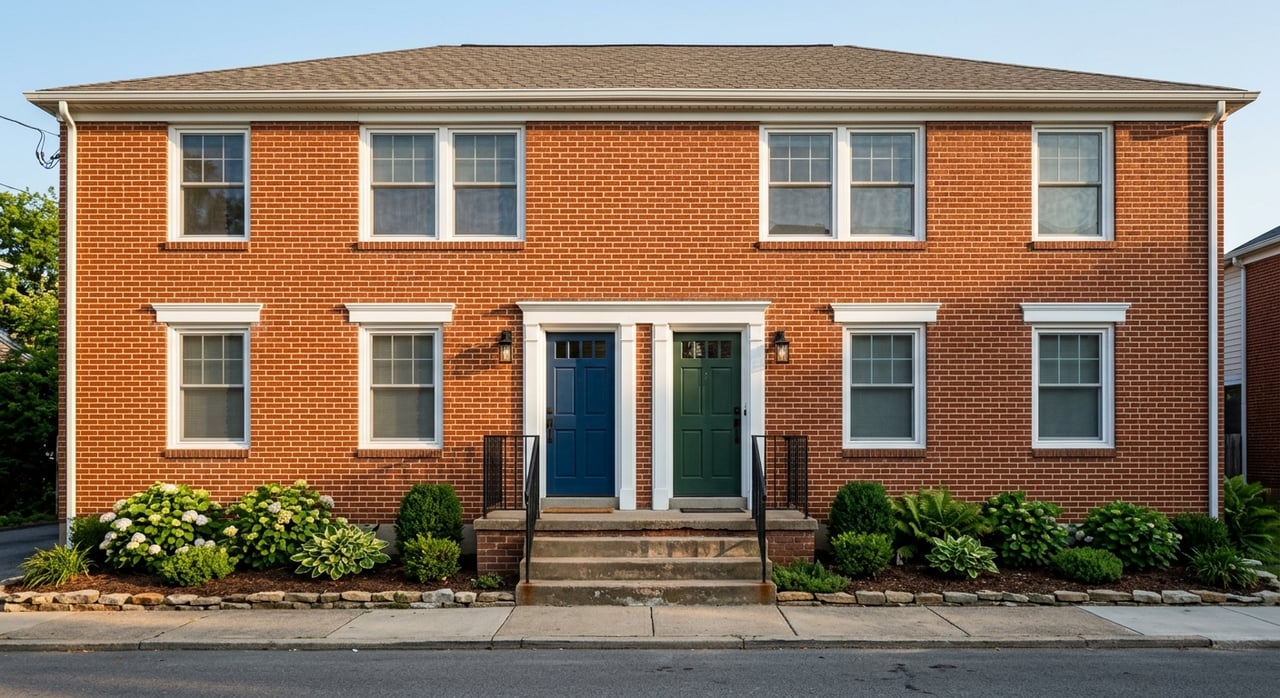
York has a housing mix that makes a few property types especially relevant for small investors. The city’s comprehensive plan describes housing stock that includes single-family detached homes, a large share of single-family attached homes, and a meaningful share of 2 to 9 unit properties.
Single-family rentals can be a good fit if you want a simpler operating model. They may also offer a broader resale market later, since future buyers could include both investors and owner-occupants.
In York, many of these homes are older detached houses or attached rowhome-style properties. That means your real risk may not be the purchase price alone. It is often the condition of the roof, plumbing, electrical, HVAC, and windows that determines whether the deal still works after closing.
Duplexes, triplexes, fourplexes, and similar properties can be appealing if you want more than one income stream. They are especially worth looking at if you are considering house-hacking or building a small portfolio over time.
That said, more units usually mean more moving parts. Vacancy in one unit can hit your numbers faster, shared systems can raise repair exposure, and York requires licensing and inspections for tenant-occupied residential rental buildings. You need to underwrite that complexity before you fall in love with the idea of higher rent.
Value-add deals naturally show up in York because the housing stock is old. The city’s 2044 comprehensive plan draft reports that more than 90% of the city’s housing stock predates 1980, and nearly half was built in 1939 or earlier.
That age can create upside, especially if the property needs cosmetic updates, layout improvements, or deferred maintenance correction. It can also bring hidden costs, permit delays, and code-compliance issues. If a property is in a locally designated historic district, some exterior changes or demolition may be reviewed by the city’s HARB.
In York, age is not a side note. It is one of the most important parts of investment analysis.
Older homes can have charm and potential, but they can also come with aging systems and layered repairs. A property that looks like a cosmetic project on the surface may need major work behind the walls or above the ceiling.
This is why repair reserves matter so much here. If you skip that part of the math, a deal that looked strong on paper can become expensive very quickly.
When you are evaluating a York investment property, pay extra attention to:
You do not need every property to be perfect. You do need to understand what may need repair now, what may need replacement soon, and what that does to your budget.
A smart York investment purchase starts with basic underwriting. That means looking at the real numbers, not just the asking price or best-case scenario.
At a minimum, you should account for:
In York, reserves are especially important because of the age of the housing stock. A property is only a good investment if it still works after you include the less exciting costs.
Property taxes are a meaningful part of the monthly carry in York. York County’s 2026 millage schedule lists York City at 18.97 mills, York City School District at 37.6824 mills, and York County at 7.55 mills.
Since taxes are based on assessed value and local millage rates, it is worth checking how the current assessment affects your projected payment. If something seems off, York County notes that assessments are used to determine taxes and that the Board of Assessment Appeals hears disputes over real property assessments.
Transfer tax is another cost buyers should not overlook. Pennsylvania has a 1% statewide realty transfer tax, and the City of York adds a 1% local realty transfer tax. In many York City purchases, that means a 2% transfer-tax burden before other closing costs or exemptions are considered.
That can make a noticeable difference in how much cash you need up front. If your numbers are already tight, underestimating closing costs can strain your deal before you even begin repairs.
In York, a rental property is not just a building. It is also a regulated asset.
The city’s Bureau of Permits and Inspections handles tenant-occupied licenses and inspections for qualifying residential rental buildings. The city zoning code also states that rental homes must be licensed and inspected. If you plan to rent the property, this should be part of your due diligence from day one.
For renovation projects, occupancy and permit requirements matter too. The city says a Certificate of Occupancy is required in several cases, including new construction, major renovations, changes in occupancy, and reoccupying condemned structures. The city also notes that permit applications filed on or after January 1, 2026 must comply with the 2021 Uniform Construction Code.
Local rules do not mean you should avoid York. They mean you should screen deals carefully and plan your timeline honestly.
Before you buy, it helps to confirm:
These steps can help you avoid buying a property that looks simple on paper but becomes complicated after settlement.
The best investment property in York is not always the cheapest one. It is the one that still makes sense after you factor in condition, taxes, local requirements, and realistic rent.
If you want a more straightforward path, a single-family rental with solid systems may be a better fit than a heavy rehab. If you are comfortable with more complexity, a small multi-unit or value-add property may offer more upside, but only if you buy at the right number and budget properly.
This is where an education-first approach matters. When you understand the tradeoffs up front, you can make decisions with more clarity and less pressure.
As you narrow your search, keep this simple checklist in mind:
A disciplined approach may feel slower at first, but it often protects you from the kinds of surprises that hurt long-term returns.
If you are exploring investment property in York, the goal is not to chase the cheapest listing or the biggest promised upside. The goal is to choose a property that fits your strategy, your budget, and your comfort with repairs and local requirements. If you want a thoughtful, numbers-aware approach to buying in Central PA, Beth Aughenbaugh can help you evaluate your options with clarity.
Stay up to date on the latest real estate trends.

We pride ourselves in providing personalized solutions that bring our clients closer to their dream properties and enhance their long-term wealth. Contact us today to find out how we can be of assistance to you!