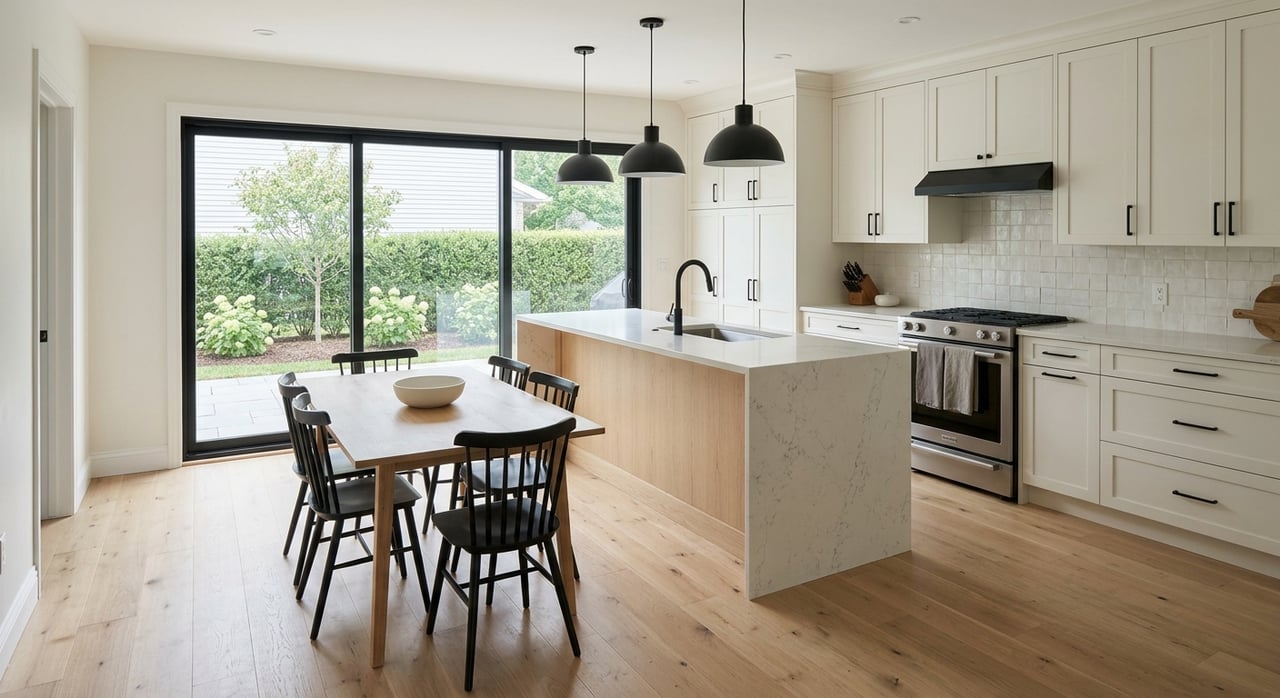
Planning Your Next-Home Move In Dillsburg
June 25, 2026
June 25, 2026
If you’re thinking about moving up in Dillsburg, you’re probably juggling two big questions at once: what your current home can help you afford, and how to line up the next purchase without creating extra stress. That can feel like a lot, especially in a smaller market where options can be limited and timing matters. The good news is that with the right plan, you can make a smart move with more clarity and fewer surprises. Let’s dive in.
Dillsburg is a small borough in York County, and that matters when you start shopping for your next home. The borough municipal profile lists 2,629 residents, along with 702 homeowners and 321 renters, which helps explain why available inventory can feel tighter than in larger nearby markets.
Your search may also naturally stretch beyond the borough limits. Dillsburg is surrounded by nearby communities, including Carroll Township, and many buyers also look at places connected to the broader Northern York County area. If you need more space, different features, or newer construction, looking beyond one zip code can give you more choices.
Recent market snapshots show a mixed picture that matters for move-up buyers and sellers. In York County, inventory was up 5% year over year in March 2026, median days on market rose from 9 to 11, and the county median sold price reached $300,000.
Dillsburg itself is a different story. Current search data shows roughly 74 homes for sale, with a median listing price around $473,530, a median sold price of $340,000, and about 56 median days on market. In plain terms, next-home options in Dillsburg can be more limited and often priced above the countywide sold median.
That makes preparation especially important. If you are selling one home and buying another, you want to know your budget, your timing, and your backup options before you start making decisions under pressure.
One of the smartest move-up strategies in Dillsburg is widening your search radius. Because the borough is small, many buyers compare Dillsburg with nearby markets that may offer different price points, more listings, or a different mix of home styles.
Current nearby benchmarks show how that can help. Camp Hill has about 56 homes for sale with a median listing price of $377,450 and 29 days on market. Mechanicsburg has about 381 homes for sale with a median list price of $413,900 and 56 days on market, while Carlisle has about 334 homes for sale with a median list price of $389,900 and 35 days on market.
If your goals are flexible, those nearby communities may open up more possibilities. You may find a resale home that checks more boxes, a townhome that lowers maintenance, or a neighborhood location that better fits your commute or daily routine.
Before you look seriously at the next home, it helps to understand what your current home can contribute to the move. Home equity is generally the difference between your home’s value and your mortgage balance, but that is not the same as what you can actually use at closing.
For a move-up sale, the more practical number is your estimated net proceeds. That figure is reduced by your mortgage payoff, Pennsylvania’s 1% state realty transfer tax, any local transfer tax collected at recording, and other closing and recording costs.
This is one of the biggest reasons move-up planning matters. A homeowner may feel confident based on rough value estimates, but your real buying power comes from the numbers after those costs are factored in.
Even if you already own a home, your next purchase still needs a fresh affordability review. Lenders typically look at your income, assets, employment, savings, monthly debts, and credit history when evaluating what you can comfortably borrow.
That means your next-home budget is not based on market headlines alone. It is based on your updated financial picture, your expected sale proceeds, and how much monthly payment feels sustainable for you now.
A quick lender conversation early in the process can help you avoid wasting time. It also gives you a clearer frame for comparing whether a larger home, a new-build option, or a nearby alternative market makes the most sense.
This is usually the biggest move-up question, and the answer depends on your finances and risk tolerance. In many cases, selling first is the lower-risk path, especially if you need the sale proceeds for your next down payment or if carrying two housing payments would feel uncomfortable.
Selling first can give you a cleaner financial picture. You know your proceeds, you reduce the chance of overlap, and you can make your next decision with more certainty.
Buying first can still work in some situations, but it usually requires careful planning. If you go this route, you need to think through the cost of overlap, how long you can carry both homes, and what happens if your current home takes longer to sell than expected.
If you need to buy before your current home closes, you may hear about bridge financing. Mortgage rules recognize a temporary bridge loan with a term of 12 months or less for a consumer who plans to sell the current home within 12 months.
This can help solve a timing problem, but it is not a small decision. It adds complexity and can increase your short-term financial pressure while you manage two properties and two deadlines.
Some buyers also explore a home equity loan or HELOC before their sale closes. A home equity loan is a lump-sum loan secured by your home, while a HELOC is a revolving line of credit against your equity. Both create additional monthly obligations if you already have a mortgage, so they should be weighed carefully.
In a move-up transaction, timing is everything. Purchase offers commonly include contingencies such as inspection or financing approval, and those moving parts can affect how confidently you can line up one closing with another.
That is why coordination matters just as much as price. The goal is not only to sell and buy, but to structure the timeline in a way that reduces gaps, overlap, and rushed decisions.
A settlement agent also plays an important role in this process. The settlement agent coordinates the transaction and records the transfer documents with the county, which helps keep the closing side of the move organized.
If resale inventory feels tight, new construction may be worth adding to your search. Current results show a meaningful new-construction segment in the Dillsburg area, including both single-family homes and townhome communities.
Recent listings show examples ranging from about $379,900 to $895,000. That gives move-up buyers another path, especially if your priorities include newer systems, lower immediate repair needs, or more modern layouts.
Of course, new construction has its own timeline and pricing considerations. But in a market like Dillsburg, it can be a useful part of your plan rather than a backup option.
If you want a smoother move, focus on sequence. A clear order of operations can help you make better decisions and avoid scrambling later.
Talk with a lender and request a mortgage payoff estimate on your current home. This gives you a more realistic view of what you can afford and what your sale may contribute.
Decide whether your plan is sell-first or buy-first. This choice shapes everything else, from your listing timeline to your offer strategy.
Before you start touring seriously, get your current home ready for market. Pricing and preparation affect how quickly your home may sell and how much flexibility you will have on the buy side.
Include nearby options like Carroll Township, Mechanicsburg, Camp Hill, Carlisle, and other surrounding areas if they fit your goals. In a small market, a wider search can make a big difference.
Work closely with your settlement agent and real estate team to keep dates coordinated. Even a strong plan works better when every moving part is being tracked carefully.
Set aside funds for moving costs, repairs, and any temporary housing gap. A move-up transaction often comes with a few expenses that are easy to underestimate.
Moving up is rarely just about square footage. It is about timing, cash flow, tradeoffs, and making sure your next step supports your bigger goals.
In Dillsburg, that process matters even more because the market is relatively small, pricing can sit above the wider county sold median, and your best-fit home may be in a nearby community rather than inside the borough itself. A thoughtful plan can help you stay flexible without feeling scattered.
When you approach the move with good numbers, a realistic timeline, and a wider local lens, you put yourself in a much stronger position. That is where experienced coordination and steady guidance can make a real difference.
If you’re planning your next-home move in Dillsburg and want a clear, education-first strategy, Beth Aughenbaugh can help you map out the sale, the purchase, and the timing in between.
Stay up to date on the latest real estate trends.
We pride ourselves in providing personalized solutions that bring our clients closer to their dream properties and enhance their long-term wealth. Contact us today to find out how we can be of assistance to you!